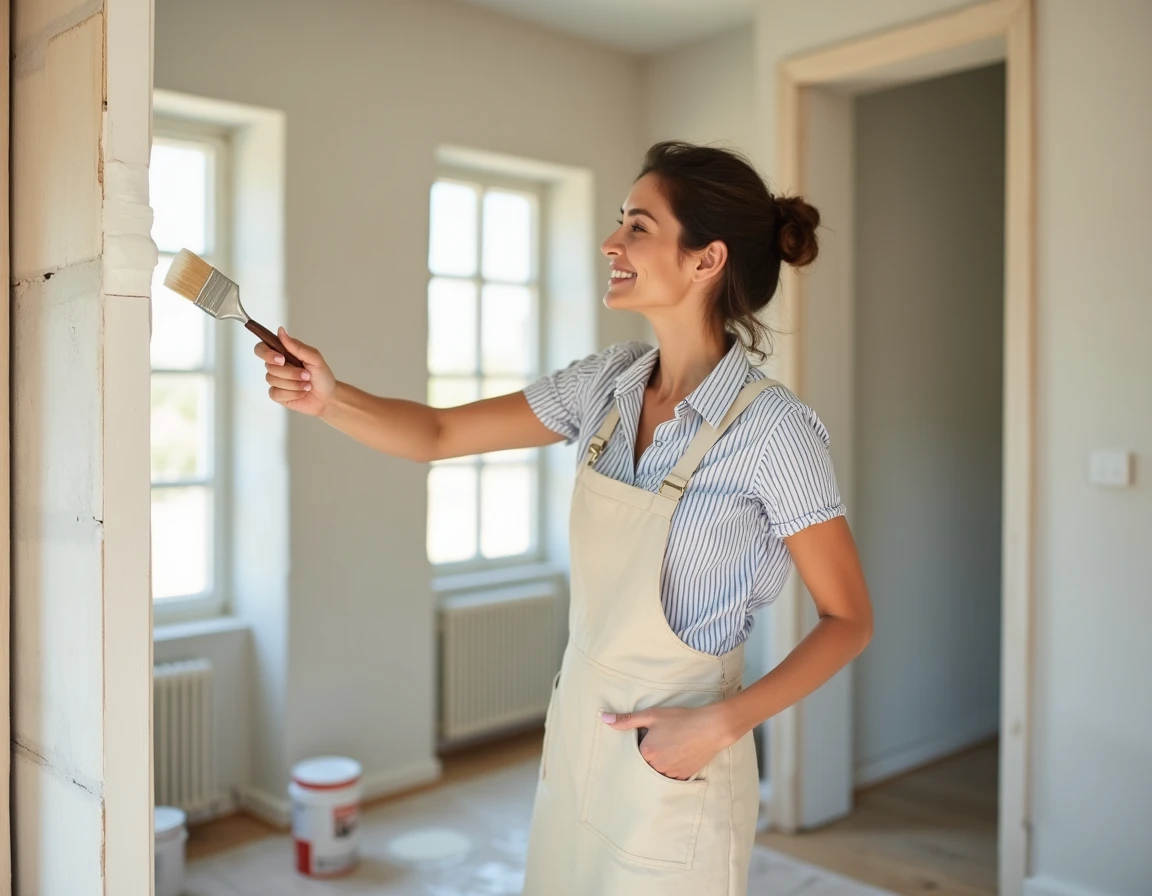
Transforming a house doesn’t necessarily require major renovations. Most often, it involves precise technical gestures, repeated at the right pace, that preserve surfaces and enhance indoor comfort. Adapting cleaning products to materials, understanding what certain cleaners release into the ambient air, or choosing the right coating for a quick renovation: each decision is based on a foundation of practical knowledge.
Enzymatic cleaners and low-tox products: what really changes in use
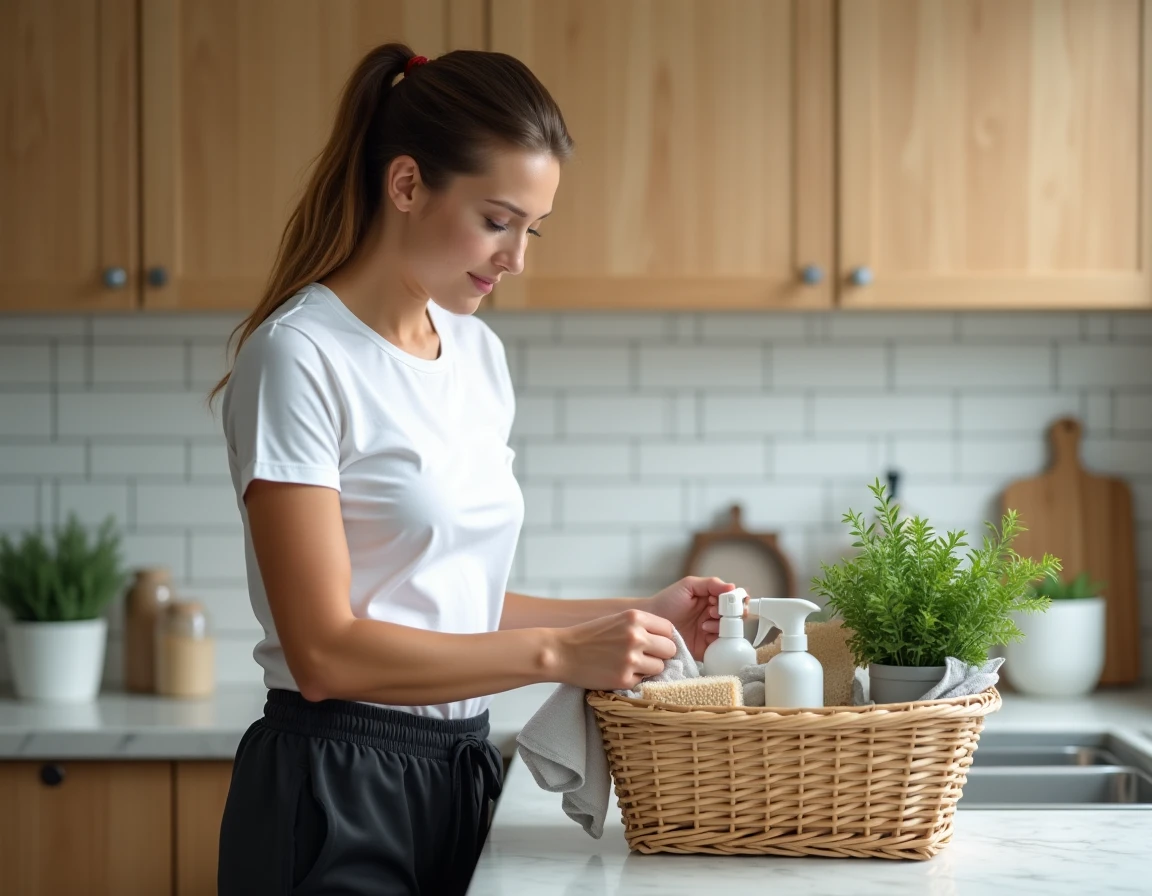
Most maintenance guides still recommend white vinegar, bleach, or multi-purpose sprays as universal solutions. These products work, but their regular use in poorly ventilated rooms poses a documented problem: sprays release volatile organic compounds (VOCs) that accumulate in indoor air.
Enzymatic cleaners work differently. Their enzymes (proteases, lipases, amylases) break down organic dirt, grease, and food residues without resorting to aggressive chemical solvents. The result on a laminate countertop or a resin sink is comparable to that of a traditional degreaser, without the film of VOCs left in the room after spraying.
Products labeled low tox, free from synthetic fragrances and controversial preservatives, are steadily gaining traction in European households, driven by concerns related to allergies and indoor air quality. To find all home information on Le blog de Bango, the topic is addressed from several practical angles.
- Enzymes work better at warm temperatures (between 30 and 40 °C), which means they should not be mixed with boiling water, as this can deactivate them.
- An enzymatic cleaner takes a few minutes to work: it needs to sit, unlike a spray that is wiped off immediately.
- They do not replace a descaler for limescale, which requires an acidic action (vinegar or citric acid).
CLP Regulation and detergent labeling: reading what changes on the bottles
The revised European CLP regulation (classification, labeling, and packaging), combined with the update of the detergent regulation, leads to the gradual reformulation of several consumer cleaners. Some preservatives and allergenic fragrances are disappearing from formulations or seeing their concentration reduced.
In practical terms, this translates into changes on labels that most consumers do not notice. A reformulated product can change in texture, action time, or scent without the packaging visibly evolving.
Identifying a reliable cleaner on the shelf
The European eco-label (the flower-shaped pictogram) remains the most reliable marker for identifying a product whose formulation meets strict thresholds for biodegradability and aquatic toxicity. A product without an eco-label is not necessarily dangerous, but it offers no verifiable guarantee on these criteria.
The terms “natural” or “ecological” printed on the packaging do not correspond to any regulatory specifications. Only the eco-label or a third-party certification (Ecocert, Nature et Progrès) commits the manufacturer to measurable criteria.
Everyday surfaces and materials: adapting the gesture to the support
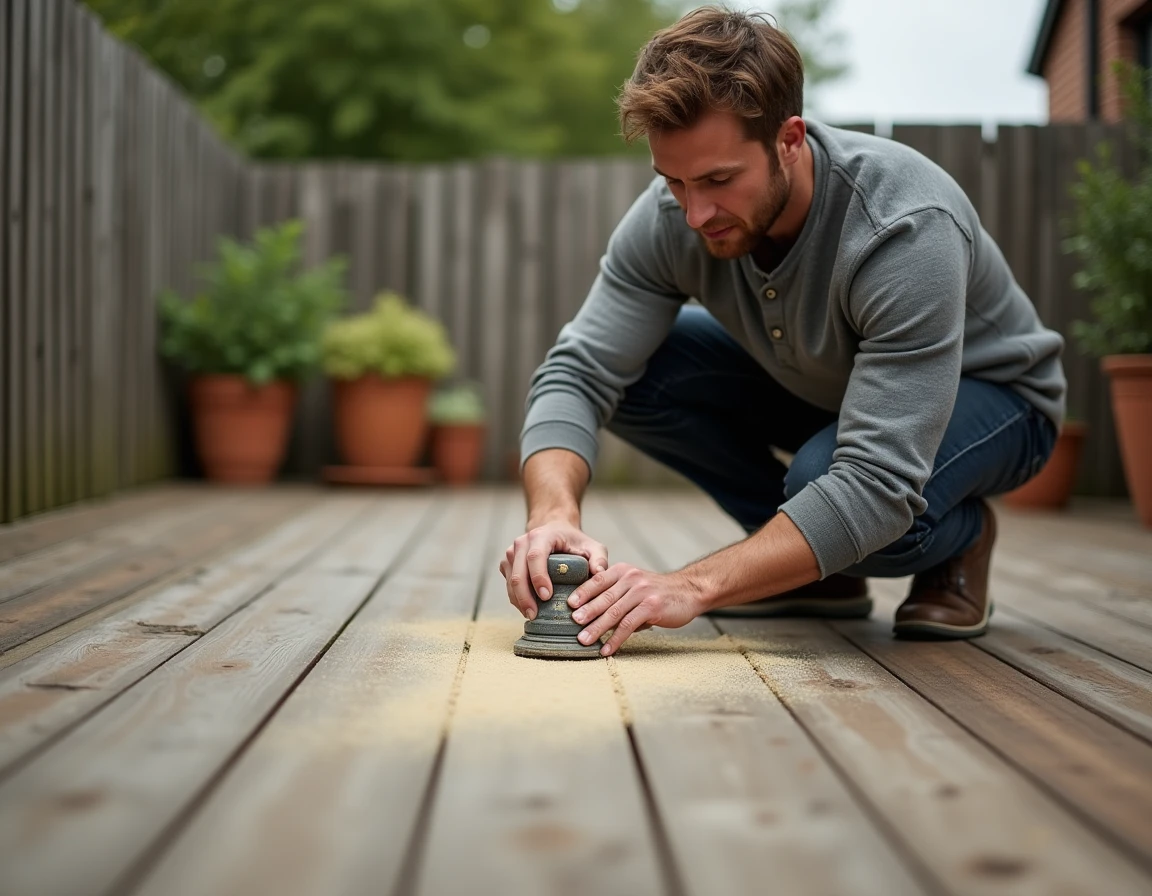
Applying the same product and technique on tiles, waxed wood, and a quartz countertop ignores the porosity and chemical resistance of each surface. This shortcut damages materials in the long term.
Raw or waxed wood cannot tolerate standing water. A damp cloth wrung out, passed along the grain, is sufficient for regular maintenance. Maintenance waxes made from beeswax or carnauba nourish the fiber without creating a plastic film on the surface.
Quartz and composite resin surfaces are cleaned with soapy water, never with an abrasive product or pure vinegar, as the acidity attacks the resin binder over time. A non-scratching sponge and a bit of dish soap remain the safest combination.
Tile joints in humid areas
Bathroom joints turn black due to the combined effects of residual moisture and soap residues. Baking soda mixed with a little water, applied as a paste with an old toothbrush, removes superficial deposits. For mold that has settled deeply, sodium percarbonate dissolved in hot water works more effectively than bleach on porous joints, without releasing chlorinated vapors in a room that is often small and poorly ventilated.
Light renovation without major work: choices with high visual impact
Transforming a room without heavy intervention relies on three levers that change the perception of a space: the floor, the walls, and the lighting. Acting on just one of these three elements is enough to radically change the atmosphere of a room.
Click-lock PVC flooring or adhesive vinyl planks can be laid directly over old tiles, provided that they are clean, dry, and level. No glue, no removal of the old covering: the operation takes one day for a standard-sized room.
On the walls, a single coat of paint on an accent wall (a single wall painted in a contrasting shade) alters the visual depth of a room. On a previously painted wall, a light sanding with fine-grit paper and a primer ensures proper adhesion of the new paint.
Lighting fixtures and perception of space
Replacing a central ceiling light with two or three distributed light sources (wall sconces, floor lamp, indirect LED strip) eliminates shadowy areas and visually enlarges the room. Changing a fixture on an existing circuit requires only a screwdriver, a connector block, and turning off the corresponding circuit breaker.
The color temperature of the bulb is as important as its intensity. A light around 2,700 kelvins is suitable for living spaces, while a cooler light (4,000 kelvins) enhances comfort in a kitchen workspace or office.
Regular maintenance and light renovation share the same principle: each surface, each material calls for a gesture and a suitable product. The time and durability gains come from this precision, not from multiplying interventions.