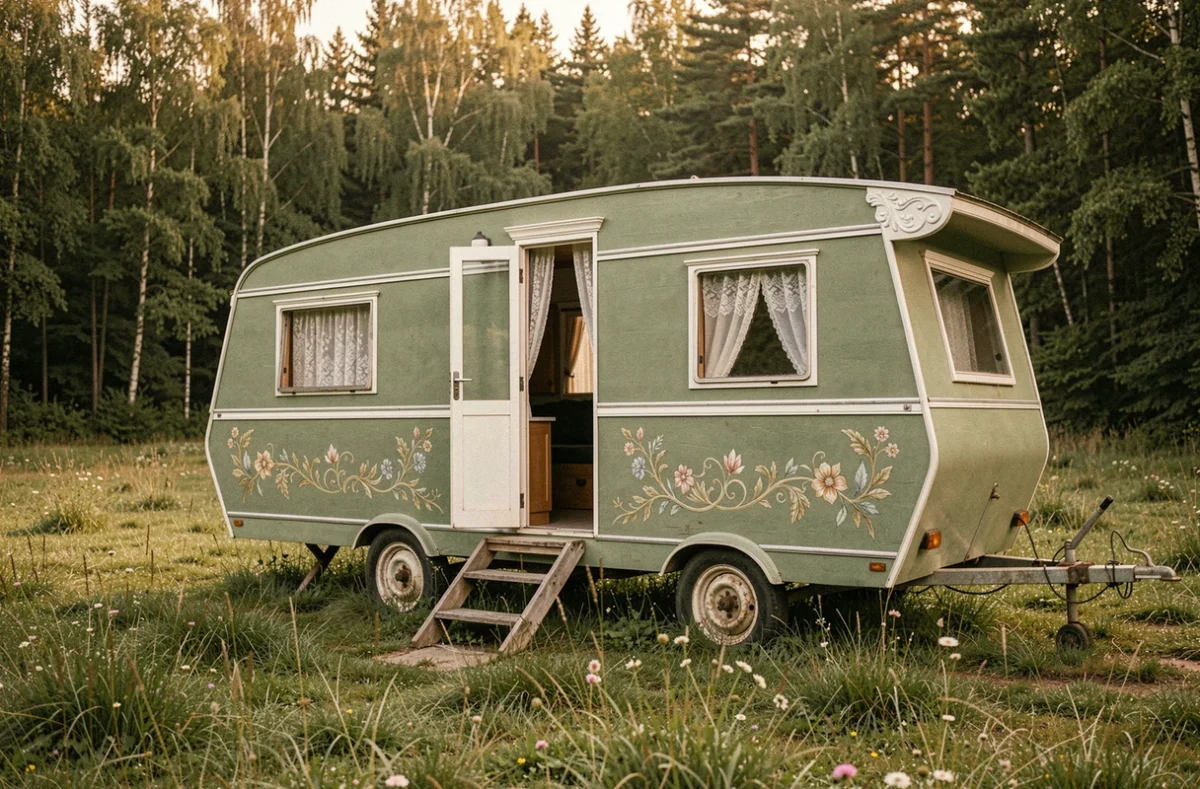
A travel trailer, in the tourist sense, refers to a wooden accommodation mounted on wheels, inspired by traditional horse-drawn carriages. It can be permanently fixed on a site or, more rarely, hitched for a route with stops. This distinction between fixed trailers and traveling trailers radically changes the nature of the stay.
Fixed trailer or traveling trailer: two experiences not to be confused
The vast majority of trailer stay offers in France concern trailers permanently placed on a property, a campsite, or private land. The traveler books a night or a weekend, arrives on site, and enjoys an unusual accommodation without moving. The atmosphere resembles that of a compact gîte, with a bohemian decor and a natural setting.
The traveling experience in a trailer, on the other hand, involves a hitch (often pulled by a horse or donkey), a marked route with stops, and heavier logistics. This format remains rare and requires specific organization: one must consider the animal’s pace, water points, and authorized parking areas.
Before booking, the question to ask the operator is simple: is the trailer mobile or installed on a permanent site? The answer conditions the type of vacation, the level of comfort, and the applicable regulatory framework. Those who wish to travel with Dormir En Roulotte will find stays designed around this nature immersion logic, with selected stops in several French regions.
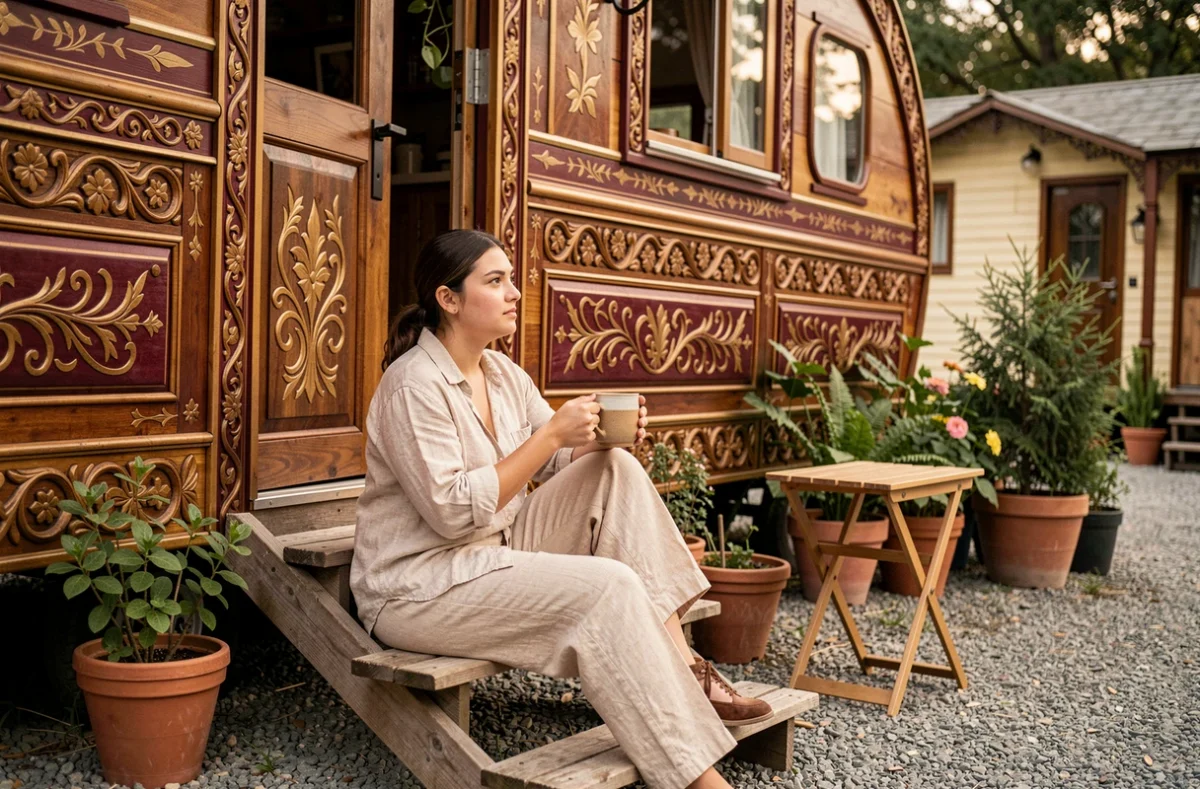
Real comfort of a night in a trailer: what the photos don’t show
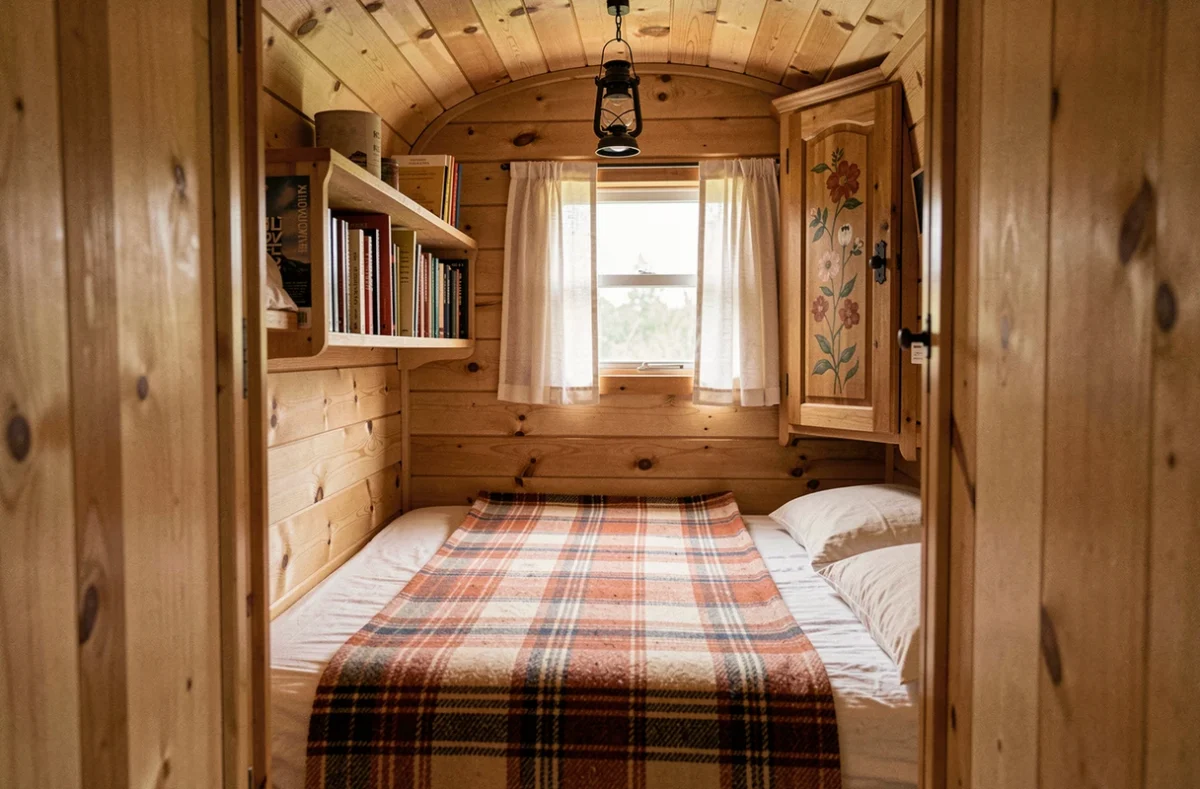
The visuals on booking platforms highlight warm interiors, thick comforters, and dimmed lamps. The reality heavily depends on the provider and the season.
Insulation and temperature
A wooden trailer offers decent insulation in summer, but temperature fluctuations in the off-season can be surprising. Some have supplementary heating (stove, electric heater), while others do not. For a stay between October and April, checking for the presence of a heating system is a reflex to have before booking.
Sanitary facilities and interior space
Not all trailers have integrated private sanitary facilities. In some properties, the toilets and shower are shared or located a few dozen meters away. The interior space is inherently limited: a trailer comfortably accommodates two adults, sometimes one or two young children with extra bedding.
- Check if the trailer includes a private bathroom or if the sanitary facilities are shared with the property
- Ask for the actual interior area and the number of adult sleeping spaces (a double bed does not always mean a true large-format mattress)
- Ensure the presence of a kitchenette or a nearby dining point, especially for a stay of several nights
- Confirm access to electricity: some trailers operate completely autonomously, without a power outlet
These practical details make the difference between a successful unusual stay and an uncomfortable night. Traveler feedback regularly mentions these points as sources of disappointment when they have not been anticipated.
Regulatory status of a trailer: light accommodation or construction
The legal framework of a trailer depends on its location and actual mobility. A trailer retaining its means of mobility (wheels, hitch) and that can be moved at any time generally falls under the regime of mobile leisure residences or light leisure accommodations.
On the other hand, a trailer placed on concrete blocks, connected to utilities, and from which the wheels have been removed can be reclassified as a construction. In this case, the obligations change: building permit or prior declaration, depending on the ground area and the municipality concerned.
For the traveler, this distinction is not just administrative. It indicates whether the accommodation is declared, insured, and compliant with local safety standards. Asking the owner about this is not intrusive: a serious operator knows the exact status of their accommodations and can specify whether it is classified as a tourist rental, in a campsite, or in another category.
Choosing a trailer stay suited to your travel profile
The choice of a trailer is not limited to the region or the price of the night. The type of traveler determines the priority criteria.
As a couple
The isolation of the site is paramount. A trailer located at the edge of a forest or in a property with few neighboring accommodations offers the sought-after tranquility. Packages with breakfast delivered add a touch of attention without imposing time constraints.
With family and children
The presence of private sanitary facilities and activities on the property becomes a determining criterion. Children adapt well to the limited space of a trailer, but parents appreciate quick access to water, especially at night. Properties offering nature activities (farm animals, marked trails, playground) prevent boredom on rainy afternoons.
With friends
Booking several trailers on the same property remains the best option. The common outdoor space (picnic table, authorized campfire, barbecue) is as important as the accommodation itself. Some properties offer grouped locations with a shared space in the center, facilitating conviviality without sacrificing the privacy of each trailer.
A trailer stay belongs to the family of unusual accommodations, alongside treehouses or yurts. Its uniqueness lies in this balance between embraced rusticity and targeted comfort. Checking a few concrete points before booking, from heating to sanitary facilities to the status of the accommodation, transforms a potentially disappointing night into a true escape in nature.