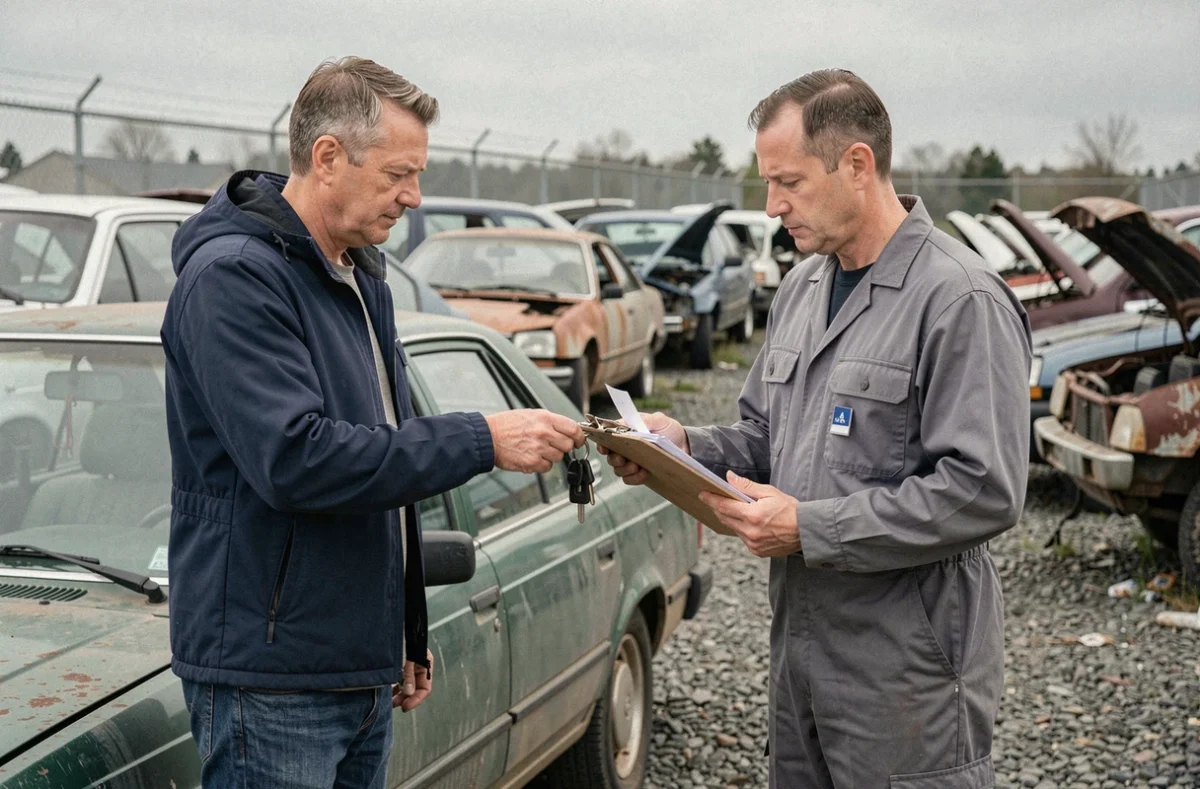
Your car no longer starts, repairs would cost more than it’s worth, and it’s been taking up space in the garage for months. Rather than letting it rust away, an authorised ELV (end-of-life vehicle) centre may take it off your hands, sometimes for a payment. Understanding when selling it for scrap becomes more worthwhile than simply having it destroyed for free can help you get the most out of a vehicle at the end of its life.
Residual parts value: what makes the difference when selling for scrap
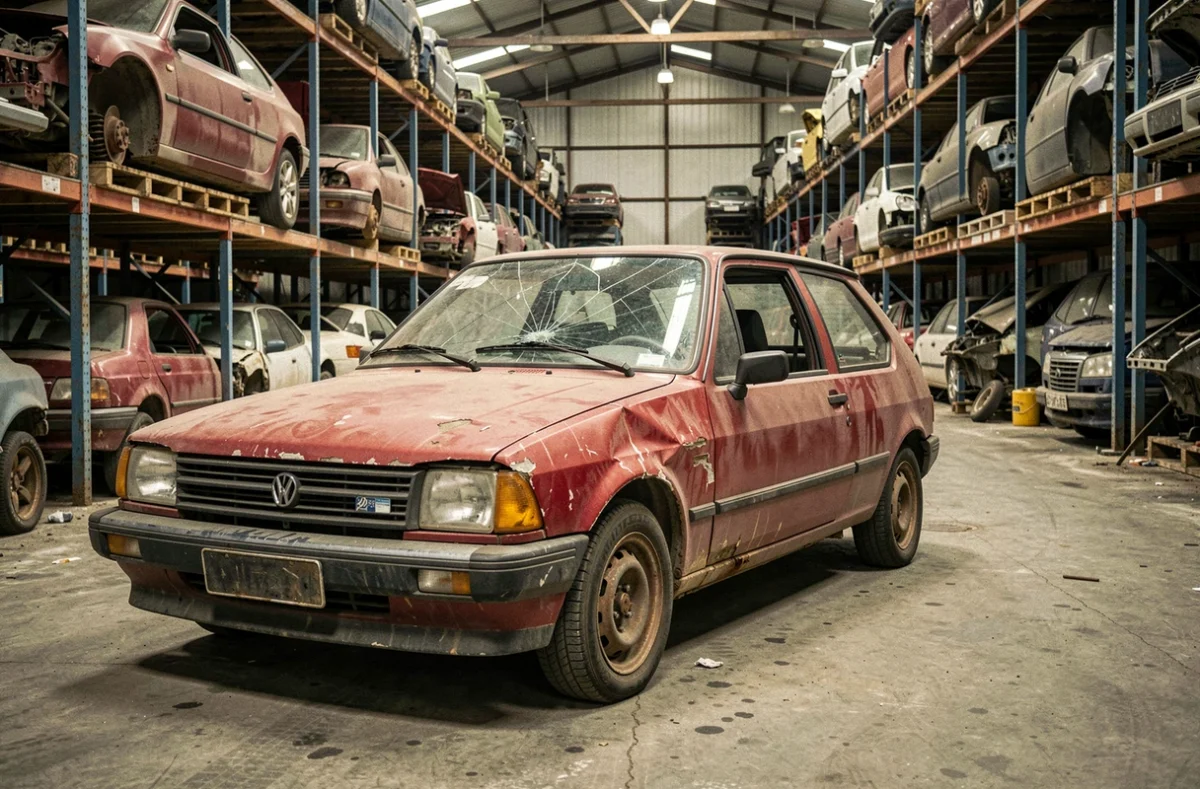
A vehicle that’s ready for the scrapyard isn’t necessarily worthless. ELV centres are interested in parts that can still be reused, such as the engine, gearbox, alternator, catalytic converter, headlights and electronic control units.
The scrap value depends directly on demand for these parts on the second-hand market. A popular model with parts that are easy to resell will fetch more than a rare vehicle whose components are in little demand.
However, ADEME points to a frequently underestimated obstacle: salvageable parts don’t guarantee a high offer. The costs of dismantling, storage and regulatory traceability all eat into the centre’s margin. An engine in good condition has value, but if the centre first has to depollute the vehicle, remove its fluids and store the part for several months before finding a buyer, that will be reflected in the price offered.
Before contacting a centre, selling your car to an auto scrapyard follows a simple principle: the more complete the vehicle and the greater the demand for its parts, the better the offer is likely to be.

Selling for scrap or free destruction: when each option makes sense
You have two very different options, and the right one depends on the actual condition of your vehicle.
Free destruction at an authorised ELV centre
Regulations require authorised ELV centres to accept any complete end-of-life vehicle free of charge. You drop off the car, the centre depollutes and dismantles it, and gives you a certificate of destruction. It costs you nothing, but you won’t receive any payment either.
This option is suitable when the vehicle is in very poor condition: badly damaged bodywork, a failed engine or extremely high mileage. If nothing can be salvaged, no centre will offer to buy it.
Selling to an auto scrapyard
If the vehicle still has working mechanical components or parts in high demand, some centres will offer a price for it. The amount depends on several factors:
- The vehicle’s make and model, which determine demand for reusable parts on the market
- Its overall mechanical condition, particularly the engine, gearbox and catalytic converter
- How complete the vehicle is: one that has already been partially dismantled is worth less and may even incur handling fees
A complete vehicle with a working engine will always fetch a better price than a wreck from which the most valuable parts have already been removed.
End of the conversion bonus: what this means in practice
The national conversion bonus was discontinued for vehicles ordered from 2 December 2024. The scheme previously allowed people to combine government assistance with scrapping an old vehicle at an ELV centre.
Its removal changes the calculation. If you were counting on this bonus to help pay for a newer vehicle, you now need to compare the scrap offer with any local grants that are still available. The Greater Paris Metropolis, for example, continues to offer assistance, subject to certain conditions, for scrapping a polluting vehicle at an authorised centre.
In practice, check with your local authority to see whether any local assistance is available before accepting the first scrap offer. An ELV centre may offer a modest price, but combined with local assistance, the total may still be worthwhile.
Practical steps for selling your car to an auto scrapyard
The process is quick if you prepare the documents in advance. Follow these steps in order.
- Gather the vehicle registration document, a valid form of ID, a certificate confirming there are no outstanding liens issued within the last 15 days, and the vehicle keys
- Contact several authorised ELV centres to compare scrap offers. Prices can vary considerably from one centre to another depending on its specialisation and stock
- Before handing over the registration document, write “sold on [date] for destruction” on it and sign it
- Obtain the certificate of destruction: this document is official proof that the vehicle has been processed in accordance with the regulations
- Remove your number plates and check that no personal belongings have been left in the vehicle
The certificate of destruction protects you legally from any future offences committed using the vehicle. Without this document, you remain responsible for it in the eyes of the authorities.
Authorised ELV centre or unregistered vehicle removal operator
Only a centre authorised by the prefecture can legally destroy a vehicle and issue a valid certificate of destruction. Illegal operators remain a recognised problem: unregistered vehicle removal operators sometimes offer quick collection, but without an official certificate.
Accepting this kind of offer can lead to administrative complications. The vehicle remains registered in your name, and you could receive fines or be held liable if it is involved in an accident. Always check that the centre is authorised by the prefecture before handing over your vehicle.
The average age of vehicles processed at ELV centres is high, which means most owners wait a long time before taking the plunge. Planning ahead, comparing offers and checking that the centre is authorised are the three key steps that can make the difference between getting a fair price and facing an administrative headache.