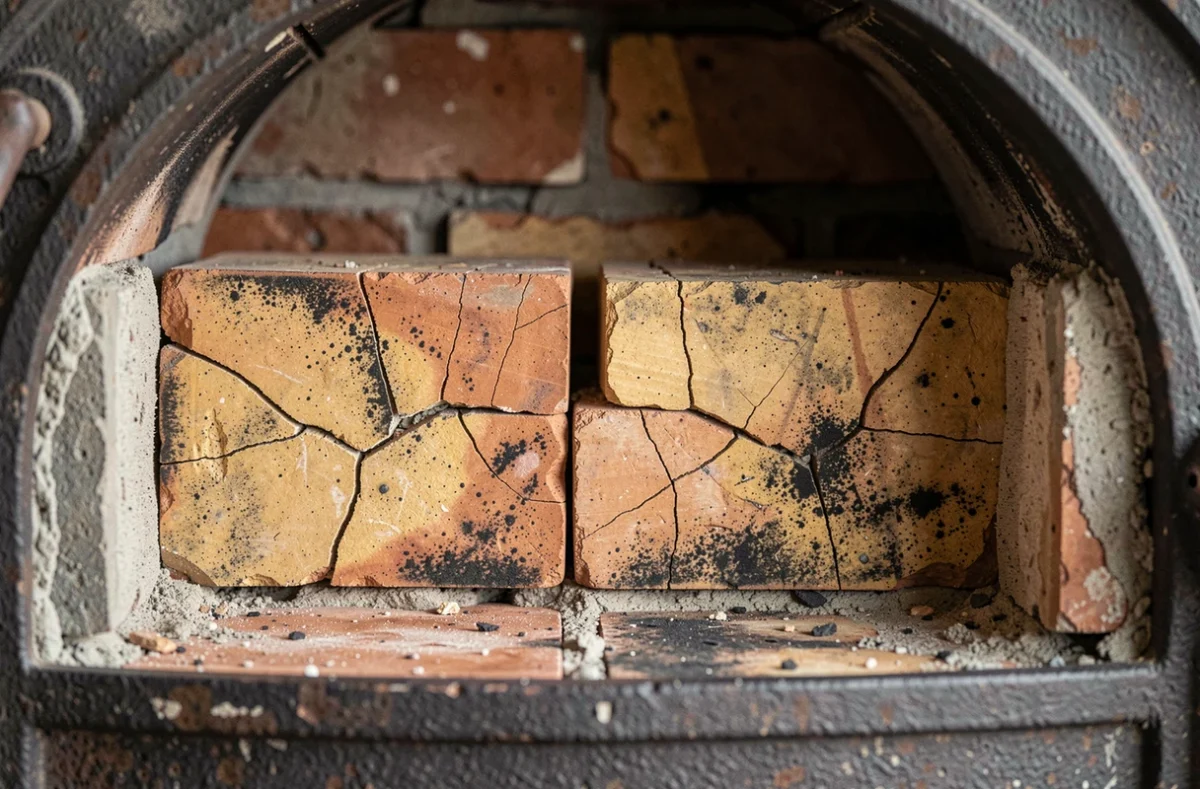
The refractory bricks lining the inside of a wood-burning stove withstand considerable temperature fluctuations with every heating cycle. Cracks eventually appear, sometimes as early as the first few seasons of use.
The question that arises is not merely an aesthetic one: a cracked brick changes how the firebox distributes heat and protects the appliance’s metal structure. Understanding the exact nature of the damage, distinguishing a surface crack from structural deterioration, and then choosing between repair and replacement all affect the stove’s lifespan.
Damaged joints and the metal wall: the overlooked diagnosis
Most guides focus on cracks visible on the surface of the refractory brick. The condition of the joints between the bricks deserves a separate inspection. A joint that crumbles or comes loose can allow flames to lick directly at the steel or cast-iron wall, even when the bricks still appear to be in place.
During the inspection, check the contact points between each part of the lining. A brick that moves slightly when pressed with a finger indicates a failed joint, not necessarily a brick that needs replacing. Repointing with refractory mortar suitable for chamotte may be enough to restore the firebox’s thermal seal without removing the entire lining.
The annual stove service is a good time to carry out this diagnosis. The model’s manual specifies the checks recommended by the manufacturer, but inspecting the bricks is not automatically included in chimney sweeping.
It is worth asking the professional to check them explicitly. They can assess the overall condition of the firebox and identify cracks and weakened joints in a single visit. When the goal is to restore the stove’s firebox for the long term, starting with a full diagnosis helps avoid filling a crack while leaving an open joint right next to it.
Chamotte or vermiculite: why the stove’s original specification matters
Not all refractory linings are the same, and replacing one material with another that looks compatible can change how the firebox works. Chamotte and vermiculite differ in density and thermal performance. Chamotte is heavier, storing heat and releasing it gradually. Vermiculite is lighter and more insulating, offering greater protection for the metal wall but storing less energy.
The stove manufacturer designed the combustion chamber around a specific lining. An unauthorised substitution (vermiculite instead of chamotte, or vice versa) can alter heat distribution inside the firebox, affect the draught and, in some cases, accelerate wear on the appliance.
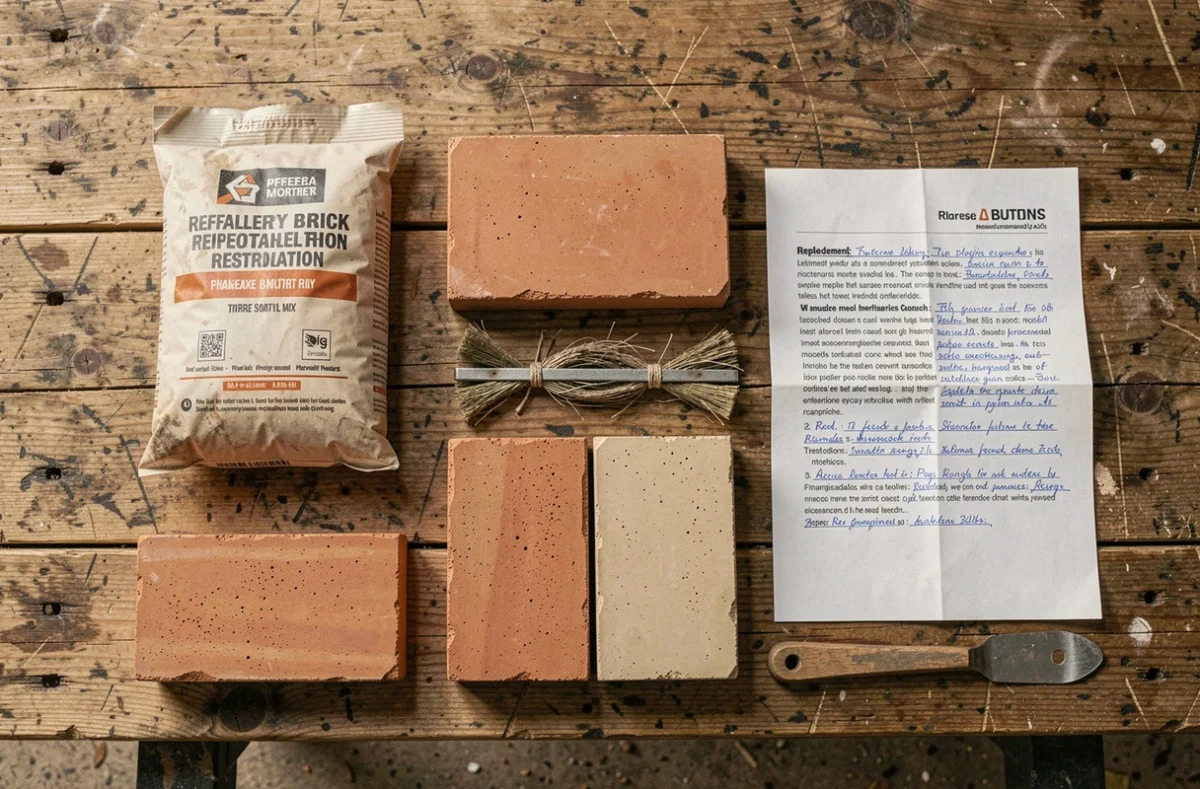
Before buying replacement panels, consult the user manual first. It lists the exact part numbers for the lining and, where applicable, any substitute materials approved by the manufacturer. Choosing a panel whose dimensions and composition match the original specifications remains the only way to ensure a compliant restoration.
Repairing a cracked refractory brick: the limits of mortar and when to replace it
A crack in a refractory brick does not always mean it needs replacing. Refractory mortar can fill surface cracks as long as the brick remains mechanically sound. However, repair is not enough in several situations:
- The brick breaks into several pieces that no longer hold together, even after the mortar has dried. The lining can no longer act as a thermal shield.
- The brick’s remaining thickness is visibly reduced compared with a new brick. A brick thinned by thermal erosion loses its insulating capacity, and mortar cannot make up for the missing material.
- The crack runs all the way through the brick, exposing the metal wall. In this case, replacement is the only reliable option for protecting the steel or cast iron.
Applying refractory mortar correctly
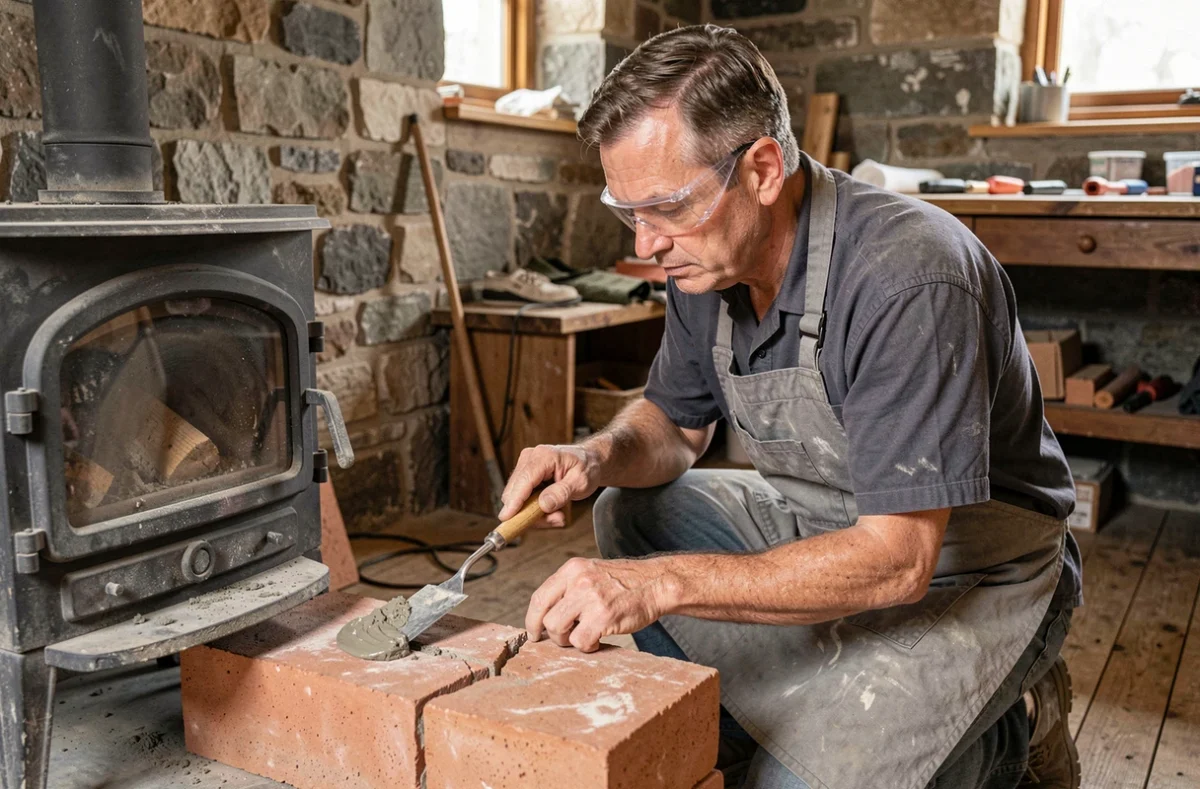
Chamotte mortar should be applied to a clean, slightly damp surface. Keep the layer thin: excess mortar shrinks as it dries and can cause new hairline cracks. The time needed to dry completely before the first firing varies by product, but gradually increasing the temperature during the first few uses helps reduce the risk of thermal shock to the repair.
Some refractory adhesives sold in cartridges are formulated for lower temperatures than those reached inside a wood-burning stove. Check the temperature range on the packaging to avoid an unpleasant surprise after a few fires.
Cracks in a new stove: a common occurrence, not a defect
Hairline cracks can appear in new refractory bricks after just a few heating cycles. This happens because the material expands when exposed to high temperatures for the first time. These microcracks generally do not affect the lining’s protective function.
The key thing to watch is not whether a crack appears, but how it develops. A crack that remains stable from one season to the next requires no action. A crack that gradually widens or causes part of the brick to break off calls for closer monitoring and possibly replacement before the metal wall is exposed.
What the Flamme Verte label means for newer appliances
The Flamme Verte standard has evolved and now requires emissions testing at partial load for new appliances submitted for certification. This change encourages manufacturers to optimise combustion chamber design, including the refractory lining. Newer Flamme Verte-certified stoves therefore use brick configurations designed to work under a wider range of combustion conditions, making it all the more important to use the original parts when replacing them.
Cracked refractory bricks do not mean a wood-burning stove is beyond repair. Distinguishing a surface crack from structural deterioration, choosing the right lining material, and inspecting the joints as well as the bricks themselves are the foundations of a lasting restoration. Checking the manufacturer’s manual before starting any work is the most cost-effective first step, well before buying mortar or replacement panels.